
Teresa’s TCM Clinical Reflections (19)
Same Lower Back Pain, Different TCM Treatments — Why?
Subtitle: How Teresa chooses between acupuncture, moxibustion, bloodletting and cupping, channel-based points, and different treatment approaches for lower back pain
By Teresa Shen, BHSc (Acupuncture), ACC Registered Treatment Provider, Registered Chinese Medicine Practitioner (NZ)
Sometimes patients ask me: “Teresa, we both have lower back pain. Why are our treatments different?”
Others ask: “Last time you treated my back. Why are you needling my leg this time?”
This reflects an important principle in how I treat lower back pain: I am not treating the words “lower back pain”. I am treating why this particular patient has lower back pain.
Lower back pain is a symptom. An acute strain, muscle or fascial injury, lumbar joint problem, nerve root irritation, peripheral nerve entrapment, or referred pain from the gluteal muscles may all produce pain around the lower back.
Different sources of pain require different treatment approaches.
First, I Ask What Can Be Treated
Before deciding how to treat, I first consider where the pain is coming from and which parts of the problem may be reversible.
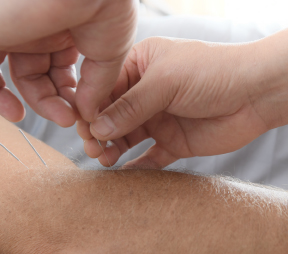
Muscle strains, some soft-tissue injuries, excessive muscle tension and certain peripheral nerve entrapments have the potential to improve. Acupuncture may help reduce pain, muscle tension and other factors that interfere with recovery.
But if a patient needs medication, specialist management or surgery, I would not suggest that acupuncture is automatically better simply because it is considered a more “natural” treatment.
Sometimes structural changes may not be reversible, but pain, muscle tension and restricted movement can still change.
Then I ask: The structural problem may not be reversible, but what can still be changed?
My principle is: First identify what can change. Then decide how to change it.
Lower Back Pain Does Not Always Mean Needling the Back
Once I decide acupuncture is appropriate, I then consider where to treat.
I combine modern anatomy and clinical examination with TCM channel differentiation. I consider which muscles or nerves may be involved and whether the pain follows a Tai Yang, Shao Yang, Yang Ming or another channel distribution.
Treatment may involve local points or distal points along the relevant channel.
Over years of clinical practice, I have also developed some commonly used approaches. For example, I may consider Juliao (GB29) when the gluteus minimus is involved, points around the gluteus medius for related muscular dysfunction, Biguan (ST31) for certain iliopsoas-related presentations, or Zhibian (BL54) when piriformis tension is significant.
These are not fixed formulas where one muscle automatically equals one acupuncture point.
The decision comes from combining tenderness, muscle tension, movement findings and the patient’s pain pattern.
Finding the “Lock”
Some important structures lie deep beneath the surface. Simply needling where the patient feels pain may not address the real problem.
The psoas major, for example, is deep. In some patients I assess the corresponding abdominal region for marked tension and tenderness.
I use a similar approach when considering peripheral nerve entrapment. If I suspect superior cluneal nerve involvement, I may examine around the iliac crest. If the lateral femoral cutaneous nerve is involved, the region around the anterior superior iliac spine becomes relevant.
I sometimes describe this as looking for the “lock.”
The whole lower back may not need to be released. Sometimes the important task is to find the key point that continues to maintain pain or restrict movement.
The same principle applies to nerve pain.
Superior cluneal nerve entrapment, deep gluteal irritation of the sciatic nerve and lumbar nerve root irritation can all produce back or leg symptoms, but the treatment locations are very different.
With nerve pain, I do not simply needle where the patient feels numbness or pain. I try to identify where the nerve is being irritated.
Sometimes I Treat While the Patient Moves
Movement acupuncture is another approach I commonly use.
Some patients feel comfortable lying down but develop pain when bending, standing up or turning.
Depending on the pain pattern and channel involved, I may select distal points and then ask the patient to gently repeat the painful movement within a safe range.
If bending was painful before treatment, we repeat the same movement after needling and compare the pain and movement.
For me, this is both treatment and reassessment.
The patient’s response to treatment gives me more information about whether my original direction was correct.
If the expected change does not occur, I reconsider the treatment direction rather than simply adding more needles or more sessions.
Cold-Damp and Blood Stasis Need Different Approaches
Acupuncture is not the only TCM method I use.
If a patient’s lower back feels cold and stiff, worsens in cold or damp weather and improves with warmth, the TCM pattern may suggest Cold-Damp. Depending on the individual presentation, I may use moxibustion or ginger moxibustion and consider points such as Shenshu (BL23), Mingmen (GV4) and Yaoyangguan (GV3) to warm and unblock the channels.
For some long-standing injuries with fixed pain and marked tenderness, where the presentation suggests Blood Stasis, Qi Stagnation and channel obstruction, I may consider bloodletting with cupping around an appropriate lumbar area.
The principle is simple: I do not choose one treatment for “lower back pain”. I choose an appropriate treatment for the person in front of me.
Final Reflection
Why can two people with lower back pain receive different treatments?
Because one may primarily have a muscular problem and another may have nerve involvement. One may need local treatment, while another may benefit from distal channel-based points. One may respond to movement acupuncture, while another needs warming or an approach aimed at moving Qi and Blood.
And for some patients, acupuncture may not be the most important next step at all. Further investigation or other medical treatment may be more appropriate.
Over the years, I have developed a simple clinical habit:
First identify the condition, then differentiate the TCM pattern. Find the source before choosing the method. After treatment, reassess.
There is no single acupuncture formula for lower back pain, and no single method is right for every patient.
The important question is not: “What treatment did I use?”
It is: Why did I choose this treatment for this particular patient?
Teresa’s TCM Clinical Reflections
Lower Back Pain Not Improving? It May Be More Than a Simple Back Strain | Acupuncture Auckland
Book an Appointment
If your lower back pain keeps returning, or previous treatment has provided only temporary improvement, a clinical assessment may help identify what is currently contributing to the problem.
Treatment is not predetermined. We consider your history, pain pattern, movement, muscle and nerve findings, together with TCM pattern differentiation, before deciding whether acupuncture is appropriate and which treatment approach may be suitable.
Book an Appointment: https://booking.mananotes.co.nz/PHD-WIN/v2
Disclaimer
This Clinical Reflection is provided for general health education and shares Teresa’s clinical experience and approach. It does not constitute individual medical advice, diagnosis or treatment.
Lower back pain can have many causes. Seek appropriate medical assessment if symptoms include progressive leg weakness or numbness, bowel or bladder changes, saddle-area sensory changes, fever, significant trauma, unexplained weight loss, or other concerning features



 中文微信:nzacupunctureclinic

Leave a reply