Once clinicians form an initial diagnosis, it is natural to notice evidence that supports it. But some of the most valuable clinical clues are the findings that do not fit. A shoulder pain case prompted Dr Win Huang to reflect on diagnostic closure, contradictory evidence and the importance of challenging our own clinical framework.
> View article
Follow Dr Win Huang through real clinical cases and see how the patient’s history, pain pattern, physical findings and response to treatment are brought together. This series focuses not on fixed treatment formulas, but on the clinical reasoning behind assessment and treatment decisions.
> View article
There is no single acupuncture formula for lower back pain. Teresa Shen explains how she first identifies the likely pain source and reversible factors, then uses clinical assessment and TCM differentiation to choose an individual treatment approach.
> View article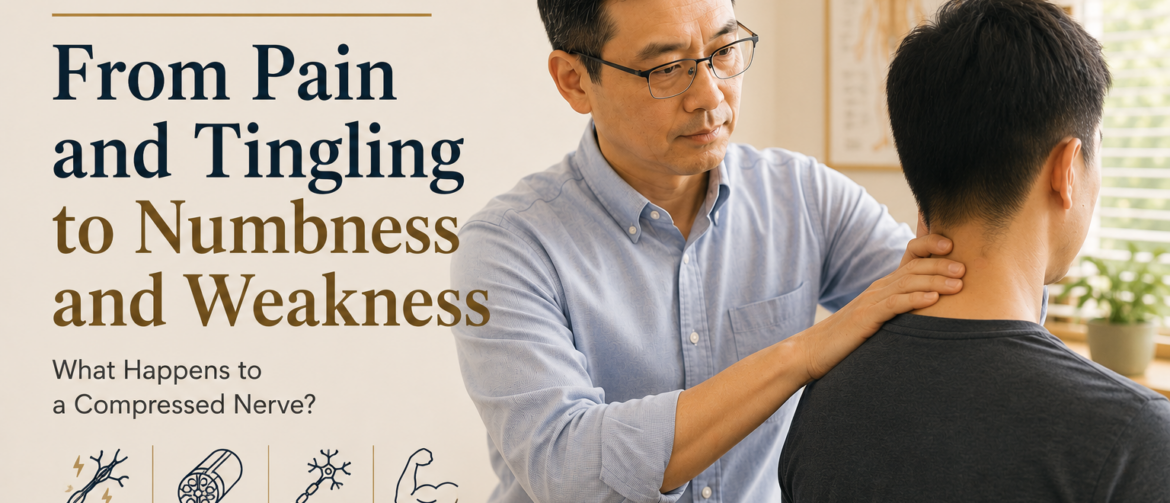
A healthy peripheral nerve is designed to move and adapt as the body moves. When its mechanical environment changes, symptoms may progress from pain and tingling to persistent numbness, sensory loss and weakness. These symptoms can provide important clues about nerve irritation and impairment.
> View article
Patients bring symptoms, not diagnoses. Good clinical reasoning means turning those symptoms into clues, forming hypotheses, testing them through history and examination, ruling out alternatives and continually reassessing the evidence.
> View article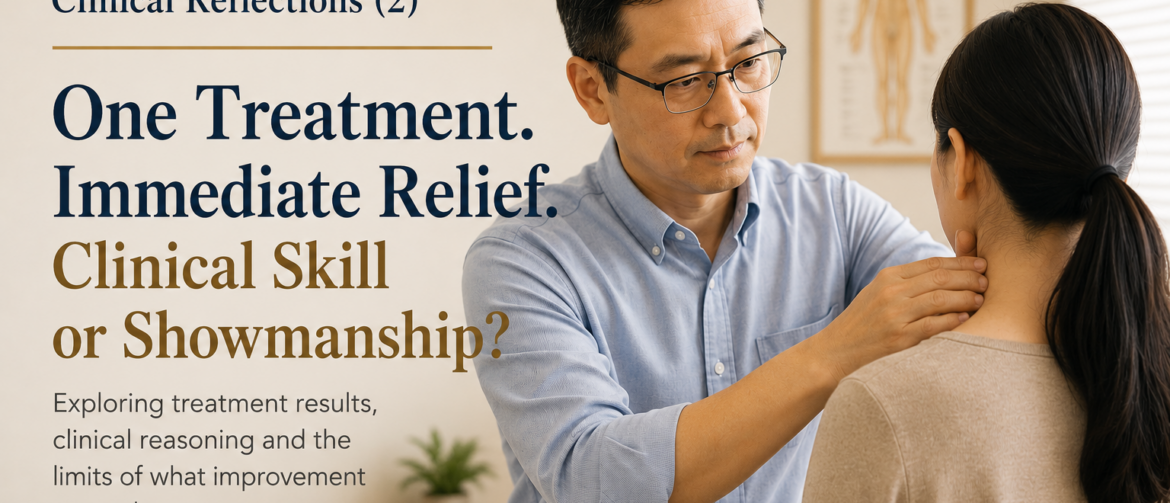
When pain disappears after one treatment, the result may be genuine—but what does it actually prove? Dr Win Huang reflects on immediate treatment responses, clinical reasoning and why doctors must distinguish real outcomes from explanations that go beyond the evidence.
> View article


 中文微信:nzacupunctureclinic