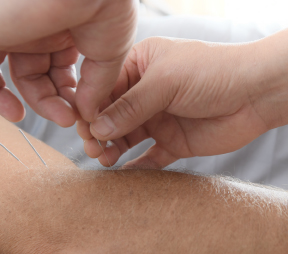
Entries tagged with “paralysis”.


A case of facial palsy is treated by acupuncture
By Dr Win Huang
Mrs Du, 67 yrs old, have a problem of facial palsy for 2 weeks. It has been treated by acupuncture for one week,it can be seen to get the improvement gradually,I could find the movement of facial muscle(right) in first day in my clinic, but can see the big movement of muscle today,I think it will be fixed by acupuncture in next one week. see the photo of acupuncture today in 24/08/10

have three weeks acupuncture ,paralysis face become close to normal,see the photo in 14/09/10.

see the photo taked after fixed by acupuncture


i have done acupuncture for 21 yrs, i got doctoral degree in acupuncture in Chinese university in 1995,and i had acupuncture work experience of big hospital in China,and i have the chinese medicine clinic in Newmarket Auckland NZ from 2003,so if you would like choose a acupuncturist to fix your problem,please come to my clnic ,you will have a excellent choice.

If you would like to make an appointment please call us on (09) 5296185, or if you require more information you may e-mail us at hwenchuan@sina.com

Facial nerve palsy

Facial nerve palsy is a nervous system disorder in which a damaged nerve in the skull affects the movement of the muscles of the face.
It is a form of cranial mononeuropathy VII.
Causes
Facial nerve palsy occurs when there is damage to the seventh cranial (facial) nerve. The seventh facial nerve is located in the skull. It controls movement of the muscles of the face. It also affects feeling in the ear canal and the sense of taste.
This type of nerve damage may occur with local growths, such as a tumor, that put pressure on the facial nerve.
It also may have no obvious cause.
Symptoms
• Change in the appearance of the face
o Difficulty closing one eye
o Difficulty making expressions, grimacing
o Difficulty with fine movements of the face
o Facial droops
o Paralysis of one side of the face
• Difficulty eating (items fall out of the weak corner of the mouth)
• Face feels pulled to one side
• Face feels stiff
• Headache
• Impairment of tast
• Increased loudness of sound in one ear
• Pain behind the ear (for Bell’s palsy)
• Sensitivity to sound (hyperacusis)
Exams and Tests
An examination will show facial drooping on one side of the face or just on the forehead, eyelid, or mouth. Examination of the eardrum may show fluid-filled sacs (vesicles).
Other tests may include:
Lumbar puncture
MIR of head
• Tests to rule out a stroke or other nervous system problems
Treatment
Finding and treating the cause (if it can be found) may relieve symptoms in some cases. The disorder may disappear on its own depending on the severity of nerve damage.
Powerful anti-inflammatory drugs (steroids) may be used if the condition is caught early enough. The drugs may be used in combination with an antiviral drug called acyclovir.
Your doctor may recommend lubricating eye drops or eye ointments to protect the eye if it doesn’t close completely. You may need to wear a patch over the eye while you sleep.
Your health care provider may recommend surgery to remove any tumors that are pressing on the facial nerve.
acupuncture can make fast improvement of facial palsy
Outlook (Prognosis)
The outlook varies. Some patients recover completely, while others permanently lose movement of the face.
Possible Complications
• Changes to the appearance of the face (disfigurement) from loss of movement
• Changes to taste
• Damage to the eye
• Nerves that grow back to the wrong structures (aberrant regeneration) — for example, smiling causes the eye to close
• Spasm of face muscles
When to Contact a Medical Professional
Call your health care provider if your face droops or you have other symptoms of facial nerve palsy.
Prevention
Quickly treating tumors or other growths that press down on the facial nerve may reduce the risk of facial nerve palsy in some cases.
Alternative Names
Neuropathy – facial; Cranial mononeuropathy VII; Seventh cranial nerve palsy

Tips for Finding an Acupuncturist

When seeking out a professional acupuncturist, it is important to ensure that the acupuncturist is licensed and certified. Sterilising procedures should be used and more often than not, your acupuncturist will likely use disposable needles. If you are uncomfortable with the idea of needles, an acupuncturist may provide alternatives such as herbal methods, magnetic needles and ear cups. These are thought to provide similar results although are not considered as effective as acupuncture that utilises needles.

Whatever path you take to treating your problem, you can be relieved to know that you have many options, particularly alternative ones such as acupuncture. Hopefully, you will find a qualified acupuncturist who can listen to your concerns about the problem and begin a treatment plan that provides effective relief.

If you would like to make an appointment please call us on (09) 5296185, or if you require more information you may e-mail us at hwenchuan@sina.com

treating swallowing problem with acupuncture

by dr win huang

acupuncture can help these patients who result from neuromuscular disease or obstructions. specially for these problem which include brain injury,cerebral palsy,spinal cord injury, stroke.we have practised and studied the problem in acupuncture for many years,we choose good points in acupuncture for swallowing problem duo to neuromuscular disease. (more…)

About Swallowing Problems

The swallowing tract extends from the mouth to the stomach. The act of swallowing is divided into three phases:
• The oral or mouth phase — moving food or liquid into the throat.
• The pharyngeal or throat phase — squeezing food down the throat and closing the airway to prevent choking.
• The esophageal phase — relaxing and tightening the openings at the top and bottom of the esophagus and squeezing food through the esophagus into the stomach.

Swallowing problems (dysphagia) can be grouped into two categories:

Oropharyngeal dysphagia — These swallowing problems happen before food reaches the esophagus and may result from neuromuscular disease or obstructions. Patients experience difficulty starting a swallow; food goes down the wrong pipe; or there is choking and coughing. This may result in poor nutrition or dehydration, aspiration (which can lead to pneumonia and chronic lung disease) or embarrassment in social situations that involve eating. Conditions that may cause oropharyngeal dysphagia include Alzheimer’s disease, Lou Gehrig’s disease, brain injury, cerebral palsy, multiple sclerosis, muscular dystrophy, Parkinson’s disease, spinal cord injury, stroke, Zenker’s diverticulum, cervical osteophytes or other obstructions.

Esophageal dysphagia — These swallowing problems originate in the esophagus. Food or liquids “stick” in the chest or throat and sometimes come back up. Causes include esophageal cancer, esophag and esophageal-motility disorders.

Individuals with dysphagia should seek a thorough examination because swallowing problems may indicate cancer of the head, neck or esophagus.
acupuncture can help these patients who result from neuromuscular disease or obstructions.

Tips for Finding an Acupuncturist

When seeking out a professional acupuncturist, it is important to ensure that the acupuncturist is licensed and certified. Sterilising procedures should be used and more often than not, your acupuncturist will likely use disposable needles. If you are uncomfortable with the idea of needles, an acupuncturist may provide alternatives such as herbal methods, magnetic needles and ear cups. These are thought to provide similar results although are not considered as effective as acupuncture that utilises needles.

Whatever path you take to treating your problem, you can be relieved to know that you have many options, particularly alternative ones such as acupuncture. Hopefully, you will find a qualified acupuncturist who can listen to your concerns about the problem and begin a treatment plan that provides effective relief.

If you would like to make an appointment please call us on (09) 5296185, or if you require more information you may e-mail us at hwenchuan@sina.com

Treating paralysis with acupuncture

by dr win huang

Mrs Uthra suffered from stroke has a left side paralysis for two months,she can not move left arm and leg little .I go to her rehabilitation centre to treat her paralysis with acupuncture.I choose point on right head and left body,she can move her left leg on bed after two session,but still can not lift her leg from bed .she can lift left leg from bed ,after 5 session acupuncture.

Image0226

I am treating Mrs Uthra with acupuncture