
Inner Knee Pain May Not Be Meniscus | Rethinking Knee Pain #1 | Acupuncture Auckland
Inner Knee Pain May Not Be Meniscus
Many people hear “locked knee” and immediately think:
“Meniscus.”
Sometimes that is correct.
But not always.
Some knees do not lock because something is physically blocking the joint.
Sometimes they lock because pain triggers a protective reflex.
That difference changes everything.
If the mechanism is misunderstood, treatment often misses the mark.
Common Symptoms We See in This Pattern
You may notice:
- Inner knee pain
- Knee feels stuck or locked
- Difficulty straightening the leg
- Pain after squatting
- Sharp pain along inner knee
- Pain walking or weight bearing
- Meniscus suspected, but recovery not improving
These symptoms may look like a textbook meniscus problem.
Sometimes they are not.
Why It May Not Be Meniscus
A label can hide the mechanism.
That is where mistakes begin.
Some “meniscus-like” cases may actually involve:
- soft tissue tension around pes anserinus
- irritation of the saphenous nerve
- protective muscle guarding
- functional locking rather than mechanical locking
In those cases the joint is not truly blocked.
The body is protecting movement.
Treating it as a structural tear may miss the real problem.
Real Case Study 1
A Locked Knee Released
A patient came with a locked knee for three days and walking was very difficult.
The knee appeared mechanically blocked.
But assessment suggested a functional locking pattern.
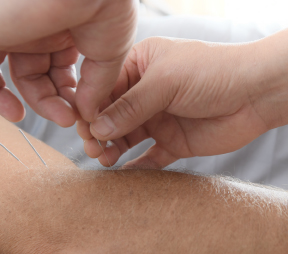
A focused acupuncture treatment using a single needle was applied.
The knee released immediately and normal walking returned.
Clinical Insight
Sometimes a locked knee is not caused by a torn structure, but by a pain reflex locking the joint.
Watch Case Video
Real Case Study 2
Not Meniscus, but Saphenous Nerve Irritation
A young patient developed sudden knee locking after squatting.
At first glance it looked like a classic meniscus tear.
But further examination showed something different:
- Meniscus tests not clearly positive
- Marked tenderness at pes anserinus
- Abnormal sensitivity around inner knee
The problem appeared related to irritation of the infrapatellar branch of the saphenous nerve.
Treatment focused on releasing soft tissue tension and calming the irritated nerve pathway.
Pain dropped from 7–8/10 to 2–3/10 immediately.
He walked out without crutches.
Clinical Insight
Sometimes “locking” is not joint blockage.
It is nerve-driven protective spasm.
That is a different diagnosis and a different treatment.
Watch Case Video
Patient Feedback
“Excellent experience with Dr Win. He correctly identified the problem with my knee and treated accordingly, relieved the pain and helped me back on my feet quickly.”
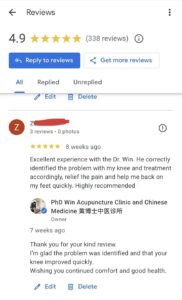
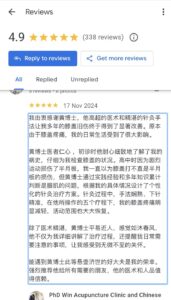
Another patient with long-standing “meniscus pain” later found the problem was not where he had believed for years. After targeted treatment, pain reduced markedly and knee function improved.
That is exactly why correct assessment matters
Why Some Inner Knee Pain Does Not Improve
Sometimes treatment stays focused inside the joint.
But the driver may be outside the joint.
Possible reasons symptoms persist:
- nerve irritation overlooked
- pes anserinus tension missed
- protective guarding remains active
- only inflammation treated
- mechanism not reassessed
Pain may stay because the pattern has not been understood.
Our Clinical Approach
At PhD Win Acupuncture Clinic, we do not assume all inner knee pain is the same.
We look at:
- movement pattern
- pain behavior
- local tenderness pattern
- nerve sensitivity
- joint versus soft tissue contribution
Treatment may include:
- targeted acupuncture
- local release methods
- cupping when appropriate
- movement advice
- addressing the pain reflex itself
The goal is not just reduce pain.
The goal is rethink the mechanism.
Related Knee Pain Cases
👉 Knee Pain Treatment in Auckland
👉 Back of Knee Pain May Not Be Tendon Pain
Book an Appointment
If inner knee pain or knee locking is not improving, it may be time to look deeper.



 中文微信:nzacupunctureclinic

Leave a reply