Website 2.0 开发日记 22 从试错施工到按图施工 日期:2026年8月11日 过去两天,我们正式进入 Website 2.0 的 Elementor 实施阶段,主要尝试搭建 Header 和首页第一屏。虽然最后发现施工方向存在问题,需要重新整理,但这两天并不是白做,反而让我们真正认识到“设计网站”和“把网站建出来”之间还缺少一个重要环节。 前期 Website 2.0 已经完成了大量设计工作,包括 Master Blueprint、Desktop Master Layout、Design System 和响应式原则。因此,真正进入 Elementor 后,本来应该按照已经确定的设计直接施工。 但这两天实际采用的方法却逐渐变成了: 放入一个组件 → 看效果 → 调参数 → 截图 → 再判断 → 再修改。 这实际上又回到了“边搭边设计”。 Header 最典型。原设计中 Logo、Navigation、中文站本来就是三个独立区域,但施工过程中一度把 Navigation 和中文站放在同一个结构里。首页第一屏也出现类似问题:虽然已有设计图,却没有先转换成完整的 Elementor 参数,就开始现场搭建和调整。 这说明真正的问题并不是设计错误,而是设计与施工之间缺少 Implementation Specification(施工规格)。 从现在开始,Website 2.0 正式固定新的实施流程: Master Layout → […]
> View article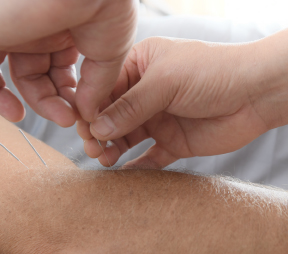

Many patients ask me whether their painful, stiff shoulder is caused by frozen shoulder or a rotator cuff injury. Although both conditions can make lifting the arm difficult, they develop differently and require different treatment approaches. In this Clinical Reflection, I explain how I distinguish between these conditions using clinical history, physical examination, imaging when appropriate, and Traditional Chinese Medicine
> View article
Many patients tell me that their shoulder is manageable during the day but becomes much more painful at night. Night pain is not a diagnosis—it is an important clinical clue. In this reflection, I share how I approach persistent night shoulder pain from both modern medicine and Traditional Chinese Medicine, and why understanding the cause always comes before treatment.
> View article
Pain below the kneecap may immediately suggest the patellar tendon. In this patient, however, the pain was worst in the morning, eased with movement and disturbed his sleep. The history and examination gradually shifted my attention towards the
> View article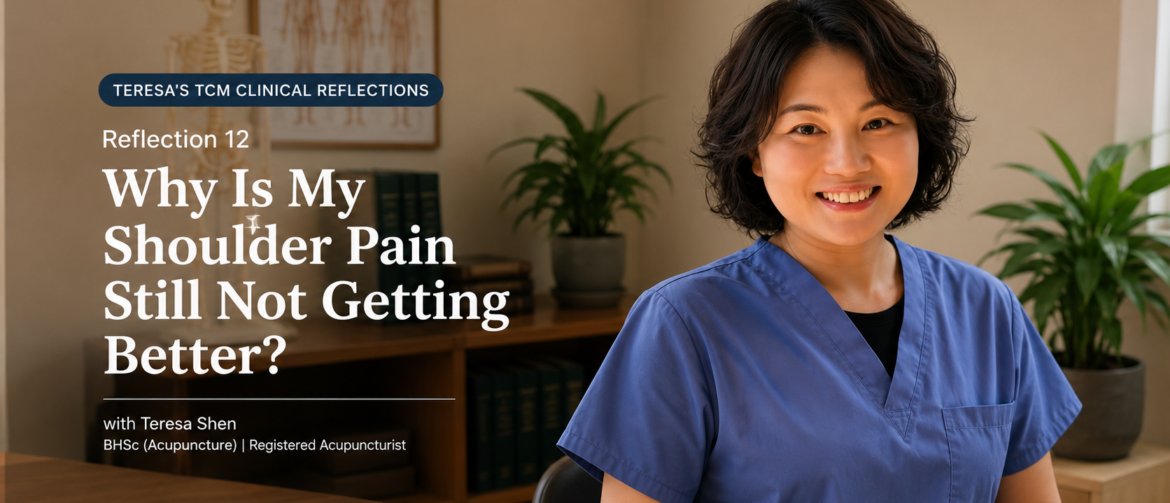
Many people assume persistent shoulder pain simply needs another treatment. In this clinical reflection, Teresa Shen shares why long-lasting shoulder pain often has a deeper story, and why understanding what is preventing recovery is the first step towards choosing the most appropriate treatment.
> View article
A diagnosis is rarely found by chance. Experienced clinicians follow clues, develop diagnostic hypotheses, test them through history taking and examination, and gradually narrow down the possibilities. Dr Huang shares the clinical thinking developed over more than forty years in practice.
> View article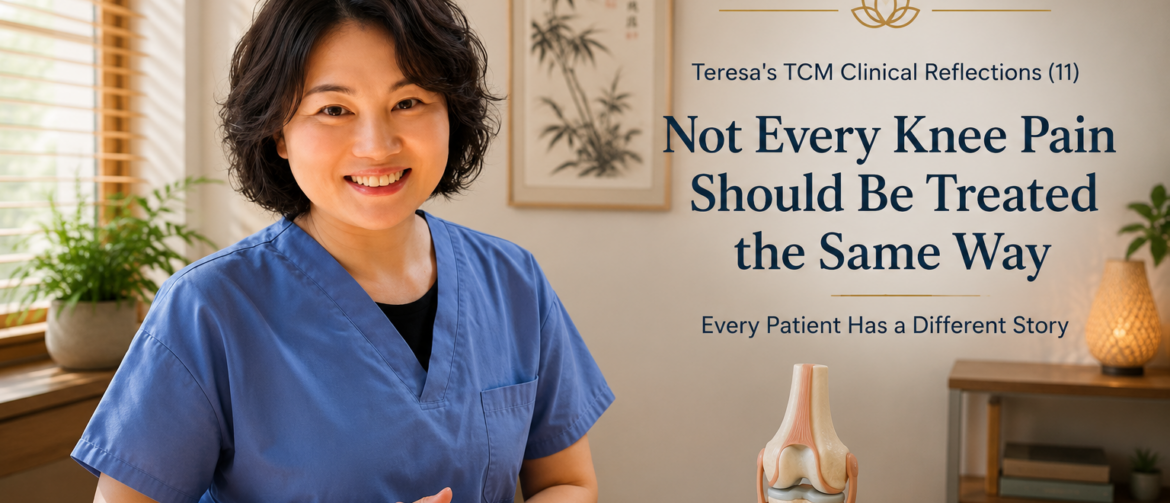
Not every painful knee is caused by arthritis. In this clinical reflection, Teresa Shen shares how one patient with medial knee pain reminded her that careful observation, thoughtful assessment, and treating the individual—not just the symptoms—are the foundation of effective acupuncture care.
> View article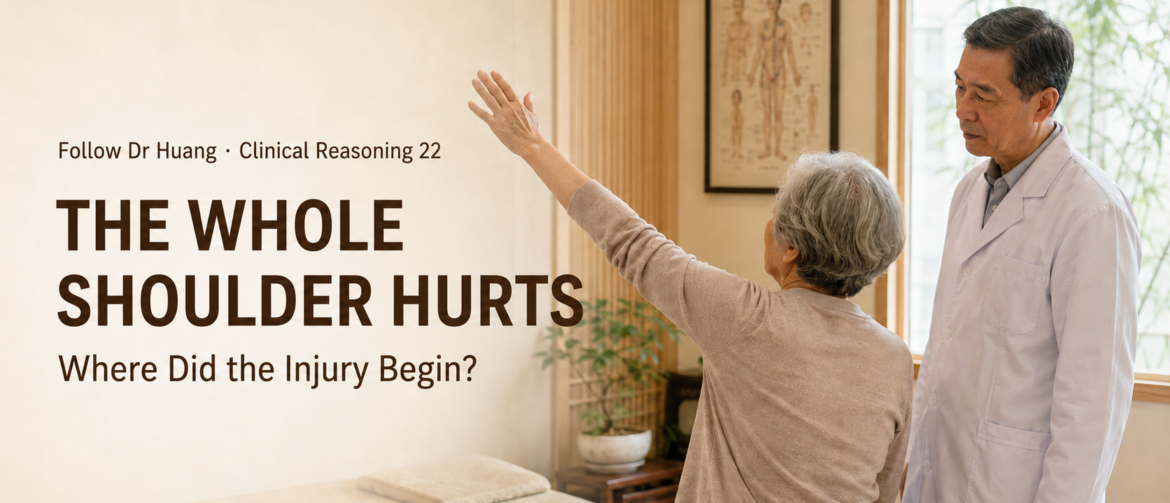
Pain throughout the shoulder does not necessarily mean that every painful area is a primary injury. By comparing the injury mechanism, neurological findings, rotator cuff tests, weakness and local tenderness, I gradually focused on the long head of the biceps tendon.
> View article
Many people expect an ankle sprain to heal naturally within a few weeks. However, in my clinic, I often see patients whose pain, swelling or repeated ankle sprains continue long after the original injury.
Over the years, treating these patients has taught me that successful recovery begins with careful assessment. It is not only about relieving pain—it is about understanding why
> View article
Recently, I treated several patients with shingles. While every case was different, these experiences reminded me once again that Traditional Chinese Medicine is about much more than treating the rash itself. In this Clinical Reflection, I share how I combine meridian thinking, individualised acupuncture, moxibustion, local treatment, and whole-body support to help patients recover.
> View article


 中文微信:nzacupunctureclinic