
🎥 Watch the Video
▶ Watch Teresa’s TCM Clinical Reflections 09
What I Have Learned from Treating Shingles
Recently, I treated several patients with shingles. Although every case was different, I noticed some common patterns that reminded me why I enjoy practising Traditional Chinese Medicine.
Many people think shingles is only a skin condition because the rash is what they can see.
In my clinic, however, I often find that there is much more happening beneath the surface.
Traditional Chinese Medicine encourages us to look beyond the rash and understand the whole person.
That is the approach I try to bring into every consultation.
Looking Beyond the Rash
One thing I have noticed is that many patients seem to develop shingles after a period of physical or emotional stress.
Some have been working long hours.
Some have not been sleeping well.
Others have recently recovered from another illness.
From a Traditional Chinese Medicine perspective, I often think about the body’s Zheng Qi — its vital energy and natural ability to resist illness.
When the body becomes weaker, recovery may take longer.
For this reason, I do not focus only on relieving the pain or helping the rash heal.
I also try to support the patient’s overall health by selecting acupuncture points that help strengthen Qi and Blood, so the body is in a better position to recover.
Following the Meridian
Another lesson I have learned is that the location of the shingles often helps guide my treatment.
I pay close attention to which meridian the rash follows.
Some patients present along the Shaoyang meridian.
Others involve the Yangming, Taiyang, or the Dai Mai.
Rather than seeing the rash as isolated spots on the skin, I see it as part of a connected meridian pathway.
This holistic meridian view is one of the principles that continues to guide my clinical thinking.
Depending on the individual patient, I often use reinforcing techniques to support the affected Yang meridian while also improving the body’s overall balance.
Relieving Pain
Pain is often the most distressing part of shingles.
When appropriate, I frequently use gentle surrounding needling around the affected area.
Rather than focusing on specific acupuncture points, I carefully place shallow needles around the painful region to encourage local circulation according to Traditional Chinese Medicine principles.
For some patients, this becomes an important part of helping them feel more comfortable during recovery.
Treating the Whole Pathway
Depending on where the shingles appear, I may also include treatment closer to the spinal region.
For example, if the rash affects the chest, I sometimes treat around the upper thoracic area.
If it affects the leg, I may include the lower back.
If it affects the arm, I may work around the neck.
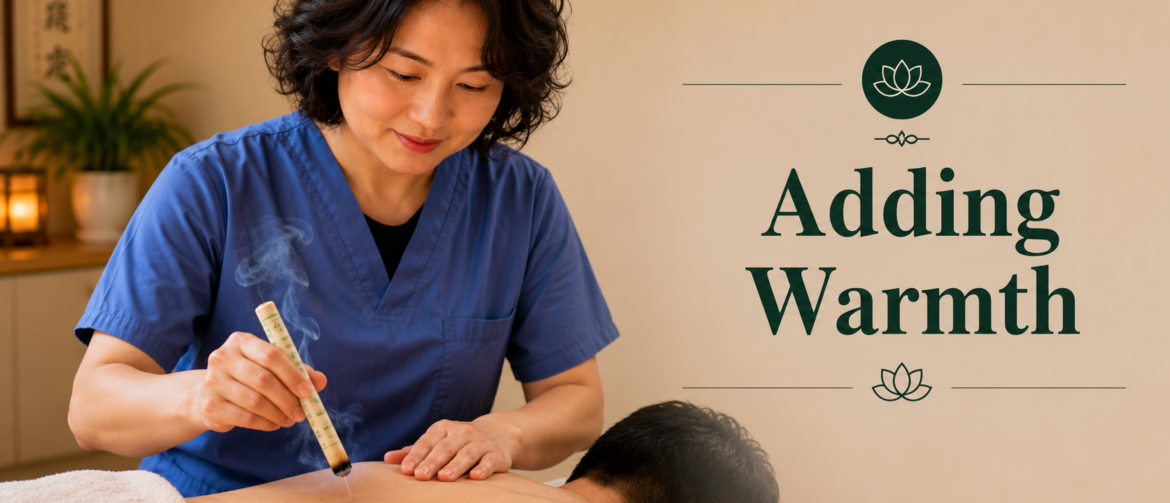
When appropriate, I sometimes combine acupuncture with gentle bloodletting or moxibustion to help warm the meridians, promote circulation and support recovery.
Every treatment is adjusted according to the patient’s individual presentation.
Recovery Continues After the Rash
One thing I often explain to my patients is that recovery does not necessarily finish when the rash disappears.
Even when the skin has healed and the pain has settled, I may recommend continuing treatment for a short period.
The goal is not simply to help the shingles recover.
It is also to help the body regain strength.
We often discuss sleep, nutrition, stress management and gentle exercise as part of that process.
Traditional Chinese Medicine reminds us that supporting the body’s overall balance may help recovery continue long after the visible rash has gone.
Teresa’s Clinical Reflection
Treating shingles has reminded me once again that healing is about much more than making the rash disappear.
Traditional Chinese Medicine teaches us to care for the whole person, not only the symptoms we can see.
When patients begin to recover their energy, sleep better and feel stronger again, I know we are helping more than the skin.
That is the approach I continue to follow every day in my clinic.
Frequently Asked Questions
Can acupuncture help people with shingles?
Some people choose acupuncture as part of their supportive care for shingles. Treatment is individualised and depends on the stage of the condition, the person’s overall health and the nature of their symptoms.
Why does Teresa continue treatment after the rash has healed?
Because Traditional Chinese Medicine aims to support the body’s overall recovery. Teresa often considers factors such as energy, sleep, stress and general wellbeing in addition to the skin itself.
Does every patient receive the same treatment?
No. Teresa’s clinical approach is based on individual pattern differentiation. Acupuncture, moxibustion, surrounding needling and other Traditional Chinese Medicine techniques are selected according to each patient’s presentation.
About Teresa’s TCM Clinical Reflections
Teresa’s TCM Clinical Reflections is a series of articles and videos in which Teresa Shen shares the clinical observations and treatment philosophy she has developed through everyday practice. Each reflection focuses on real patient experiences, holistic meridian thinking and individualised Traditional Chinese Medicine care.
Book an Appointment
If you are recovering from shingles or continue to experience discomfort, Teresa Shen provides individual Traditional Chinese Medicine assessments at PhD Win Acupuncture Clinic.
Book Online
https://drwin.co.nz/online-booking/
Medical Disclaimer
This article is for general health education only and should not be considered personal medical advice, diagnosis or treatment. Shingles can sometimes lead to complications, including persistent nerve pain and eye involvement. If you develop a painful rash, facial symptoms, vision changes, fever, or worsening symptoms, seek prompt assessment from an appropriately qualified healthcare professional.



 中文微信:nzacupunctureclinic

Leave a reply