
Teresa’s TCM Clinical Reflections 06 Why I Often Combine Moxibustion with Acupuncture
Warm the Body. Relax the Mind. Support Recovery.
A Traditional Chinese Medicine Perspective
▶ Watch Teresa’s TCM Clinical Reflections 06
Why I Often Combine Moxibustion with Acupuncture
Many people have heard of acupuncture, but fewer have experienced moxibustion.
Moxibustion is a traditional therapy used in Chinese medicine for thousands of years. It uses the gentle heat produced by burning compressed mugwort near specific acupuncture points or treatment areas.
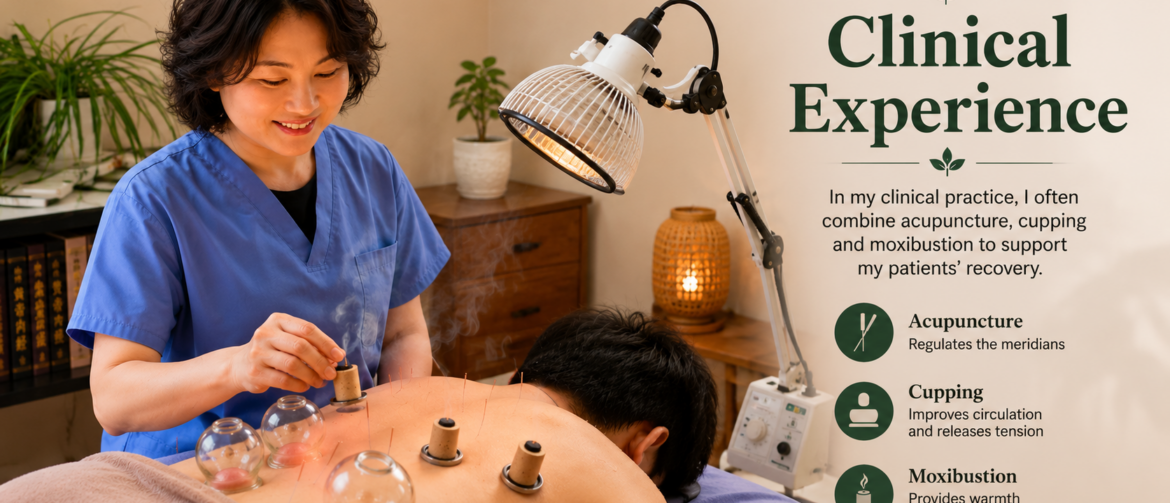
In my clinical practice, I often combine acupuncture, cupping, and moxibustion when it is suitable for the patient.
Acupuncture helps regulate the meridians. Cupping helps improve local circulation and release muscle tension. Moxibustion adds gentle warmth where warmth is needed.
Together, these therapies can support the body in a more complete way.
What Patients Often Feel During Moxibustion
One of the first things many patients tell me during moxibustion is:
“I feel warm.”
For patients who often feel cold, especially in winter or after long periods of illness, this warmth can feel very comforting.
Some patients also say they feel calmer during treatment. Their breathing becomes slower. Their body feels less tense. They may become quiet, deeply relaxed, or even fall asleep.
This is one reason I enjoy using moxibustion.
Sometimes healing is not only about reducing pain. It is also about helping the whole body feel safe, warm, calm, and relaxed again.
A Traditional Chinese Medicine Perspective
From a Traditional Chinese Medicine perspective, moxibustion is commonly used to warm the meridians, dispel Cold, support Yang Qi, and promote the movement of Qi and Blood.
It may be considered when a patient presents with Cold-Damp patterns, stiffness, poor circulation, cold abdomen, cold hands and feet, or symptoms that feel better with warmth.
For example, some patients with neck and shoulder tightness feel more relaxed after moxibustion.
Some patients with headaches, joint discomfort, period pain, digestive discomfort, or frequent urination may also report positive changes when moxibustion is used appropriately as part of their treatment plan.
Every patient is different, so moxibustion is not used in exactly the same way for everyone.
Why I Continue to Use Moxibustion
Today, not every clinic uses moxibustion.
Some clinics avoid it because of the smoke, the smell, or the practical setup required during treatment.
I understand those concerns.
However, when moxibustion is used carefully, safely, and appropriately, I have seen many patients respond very well to this gentle warming therapy.
Many patients tell me they enjoy the feeling of warmth. They feel more comfortable during treatment, and some feel that their muscles relax more deeply when moxibustion is added to acupuncture or cupping.
For me, moxibustion is not a replacement for acupuncture.
It is a valuable complementary therapy that can make treatment feel warmer, calmer, and more supportive.
Teresa’s Clinical Reflection
One of the things I appreciate most about Traditional Chinese Medicine is that treatment does not have to rely on only one method.
Sometimes the body needs regulation.
Sometimes it needs movement.
Sometimes it needs warmth.
Acupuncture, cupping, and moxibustion each have their own role. When combined thoughtfully, they can support the patient from different angles.
For me, moxibustion is not only about heat.
It is about helping the body relax, helping circulation move, and helping the patient feel supported during recovery.
That is why moxibustion remains an important part of my clinical practice.
Frequently Asked Questions
What is moxibustion?
Moxibustion is a Traditional Chinese Medicine therapy that uses the gentle heat from burning mugwort near acupuncture points or treatment areas. It is often used to warm the meridians and support circulation.
Why combine moxibustion with acupuncture?
Acupuncture helps regulate the meridians, while moxibustion provides gentle warmth. In suitable cases, combining both therapies may help patients feel more relaxed, warmer, and better supported during treatment.
Is moxibustion suitable for everyone?
No. Moxibustion should be selected according to the patient’s condition and Traditional Chinese Medicine pattern. It may not be suitable for some heat-type conditions or certain sensitive patients.
What conditions may moxibustion support?
In Traditional Chinese Medicine practice, moxibustion may be used for Cold-Damp patterns, stiffness, cold abdomen, muscle tension, period pain, joint discomfort, digestive discomfort, or symptoms that feel better with warmth. Individual assessment is always important.
About Teresa’s TCM Clinical Reflections
Teresa’s TCM Clinical Reflections is a series of educational articles and videos exploring common health conditions through the principles of Traditional Chinese Medicine.
Each reflection combines classical TCM theory with Teresa Shen’s clinical experience, helping patients better understand acupuncture, moxibustion, cupping, lifestyle care, and holistic recovery.
Book an Appointment
If you would like to explore whether acupuncture, cupping, or moxibustion may be suitable for your condition, Teresa Shen welcomes you to PhD Win Acupuncture Clinic for an individual Traditional Chinese Medicine assessment.
Book Online
https://drwin.co.nz/online-booking/
Medical Disclaimer
This article is provided for general health education only. It is not intended to replace professional medical advice, diagnosis, or treatment. Every patient is different. Please seek assessment from a qualified healthcare professional if you have persistent, severe, or concerning symptoms.



 中文微信:nzacupunctureclinic

Leave a reply