
▶ Watch Teresa’s TCM Clinical Reflections 07
How I Approach Hip Pain
Hip pain is one of the conditions I frequently see in clinical practice.
Some patients experience pain while walking.
Others struggle to climb stairs, stand up from a chair, or sleep comfortably on one side.
Although the symptoms may appear similar, I do not believe every hip problem should be treated in the same way.
In Traditional Chinese Medicine, understanding why the hip hurts is just as important as treating the pain itself.
Every treatment begins with an individual assessment, because each patient’s body tells a different story.
Acupuncture Combined with Movement
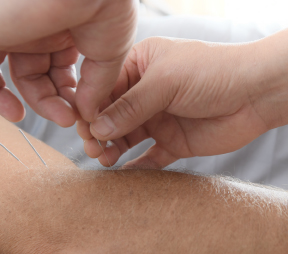
One of the techniques I often use is to combine acupuncture with gentle movement.
After inserting acupuncture needles into carefully selected points, particularly around the Shaoyang meridian, I encourage the patient to slowly move the hip.
This may include gentle flexion, extension, internal rotation and external rotation, always within a comfortable range.
Rather than keeping the joint completely still, gentle movement allows muscles, tendons, ligaments and the joint itself to respond naturally while acupuncture is working.
Many patients notice that their hip begins to move more freely during the treatment.
Movement becomes part of the treatment itself.
When Warmth Makes the Difference
Some patients describe their hip pain as worse in cold weather or after sitting for a long time.
Others say their symptoms improve once the body has warmed up.
For these patients, I often add moxibustion around the hip.
From a Traditional Chinese Medicine perspective, moxibustion helps warm the meridians, dispel Cold, reduce Dampness and promote the circulation of Qi and Blood.
Patients frequently describe a comfortable warmth that continues even after the treatment has finished.
Looking Beyond the Hip
For older patients, I often consider more than the hip joint itself.
Traditional Chinese Medicine recognises that the Kidney system plays an important role in supporting bones, joints and healthy movement.
When signs suggest a Kidney deficiency pattern, I also include acupuncture and moxibustion around the lower back.
Supporting Kidney Yang, warming the lower back and strengthening the body’s vitality may become an important part of treatment.
Rather than focusing only on the painful area, I look at how different parts of the body work together.
Releasing Local Stagnation
Some patients present with significant local tenderness around the hip.
In carefully selected cases, I may combine acupuncture with light bloodletting and cupping around the painful area.
From a Traditional Chinese Medicine perspective, this approach helps promote the movement of Qi and Blood and reduce local stagnation.
The treatment is always adapted to the patient’s condition, symptoms and comfort level.
Teresa’s Clinical Reflection
One of the reasons I enjoy treating hip pain is that every patient responds differently.
Some improve most through movement.
Some benefit from warmth.
Some need support for the lower back before the hip begins to recover.
Traditional Chinese Medicine reminds us that successful treatment is rarely about using one technique for every patient.
It is about understanding the individual, choosing the appropriate therapies, and adjusting the treatment as recovery progresses.
For me, movement, warmth and individualised care are the three principles that continue to guide my approach to hip pain.
Frequently Asked Questions
Can acupuncture help hip pain?
Many people choose acupuncture to help manage hip pain. Treatment is individualised according to the patient’s symptoms, mobility and Traditional Chinese Medicine assessment.
Why do you ask patients to move during acupuncture?
Gentle movement while the needles are in place may help muscles and joints respond naturally during treatment. This technique is selected only when appropriate for the patient’s condition.
Why do you use moxibustion?
Moxibustion provides gentle warmth and is commonly used in Traditional Chinese Medicine for Cold-Damp patterns or symptoms that improve with warmth.
Do all hip pain patients receive the same treatment?
No. Every treatment plan is individualised. Depending on the patient’s presentation, acupuncture may be combined with movement, moxibustion, cupping or other Traditional Chinese Medicine techniques.
About Teresa’s TCM Clinical Reflections
Teresa’s TCM Clinical Reflections is a series of educational articles and videos sharing Teresa Shen’s clinical observations and Traditional Chinese Medicine approach to common musculoskeletal and internal health conditions.
Each episode combines classical TCM principles with practical clinical experience to help patients better understand how individualised treatment supports recovery.
Book an Appointment
If you are experiencing persistent hip pain or reduced mobility, Teresa Shen offers individual Traditional Chinese Medicine assessments at PhD Win Acupuncture Clinic.
Book Online
https://drwin.co.nz/online-booking/
Medical Disclaimer
This article is provided for educational purposes only and should not be considered medical advice. Every patient is different, and treatment should always be based on an individual assessment by a qualified healthcare professional.



 中文微信:nzacupunctureclinic

Leave a reply