Archive for July, 2009

Herbs(cooking and drinking)

The Kind of Container
The best container is ceramic. Glass and non-reactive metal (such as stainless steel) are okay. It is important that you need a teapot with lid. Materials to avoid include cast iron or aluminum, which may interact with Chinese herbs then causing chemical reactions that can alter the therapeutic effect of the herbs, so you should avoid using them.

Water
In ancient times the source of the water used in the tea was an important issue. Some teas required water from a spring; others called for water collected during a rain. Nowadays, any drinking water is acceptable.

Cooking
Soak the herbs. Place the herbs into the water. The water should cover the herbs by about 2 centimetres (two or three cups of water should be okay). If you have enough time to do the preparations before cooking, you can soak the herbs for half an hour or even one hour. In this way, the herbs can absorb the water completely.
(more…)

Acupuncture may improve lower back pain

Reuters Health

Monday, September 24, 2007

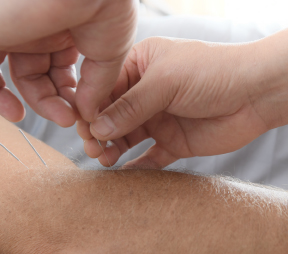
NEW YORK (Reuters Health) – Acupuncture leads to greater improvements in chronic lower back pain than does standard treatment, according to the results of the German Acupuncture (GERAC) trials.

“To our knowledge, no studies have directly compared acupuncture with guideline-based conventional therapy,” Dr. Michael Haake, from the University of Regensburg in Bad Abbach, Germany, and colleagues note in the Archives of Internal Medicine.

The GERAC trials involved 1162 patients who had chronic lower back pain for an average of 8 years. They were randomly assigned to get real acupuncture, based on traditional Chinese medicine; sham acupuncture, involving needling at non-acupuncture points; or conventional therapy with drugs, physical therapy, and exercise.

(more…)

logan swan and dr huang 001Wenchuan Huang, associate professor, has worked in the Acupuncture-moxibustion Department of Shandong Provincial Hospital for 6 years from 1995 to 2001, and he is the deputy director of the department as well.Shandong Provincial Hospital is a general hospital, which is in charge of medical treatment, teaching and research. There are 2400 staff and 1200 beds in the hospital whose daily outpatient is above 3000.

Wenchuan Huang is the only one who got Doctorate(Ph.D) on acupuncture-moxibusetion in Shandong Province. He is responsible for diagnosing and treating the outpatients and inpatients of the Acupuncture-moxibustion Department. He hosts the daily ward round, meeting and discussion on the difficult cases and works out the suitable therapy to cure patients. With his efforts, acupuncture-moxibustion therapy becomes the one of the characteristic techniques of our hospital. He conquers many complicated cases that cannot be cured by west medicine, so he gradually raises public attention in the medical field of China and becomes the well-known acupuncture-moxibustion specialist of Shandong.

Wenchuan Huang was appointed to be conductor of postgraduates for masterate by Shandong Medical University in June; 2001. He directs postgraduates’ medical stucy and clinical practice. In recent years, many physicians from U.S.A, Sweden, Switzerland, Australia and Austria come to learn acupuncture-moxibustion technology from him. He is a responsible teacher and makes Chinese medicine more and more acceptable around the world. Mr. Huang is also one of the leading number of two research tasks of Chinese Medicine Management Bureau. Experts have appraised one, and the other is on. He has pressed many academic theses on state-level magazines and co-published 2 books, chiefly editing one of them.