Once clinicians form an initial diagnosis, it is natural to notice evidence that supports it. But some of the most valuable clinical clues are the findings that do not fit. A shoulder pain case prompted Dr Win Huang to reflect on diagnostic closure, contradictory evidence and the importance of challenging our own clinical framework.
> View article
Follow Dr Win Huang through real clinical cases and see how the patient’s history, pain pattern, physical findings and response to treatment are brought together. This series focuses not on fixed treatment formulas, but on the clinical reasoning behind assessment and treatment decisions.
> View article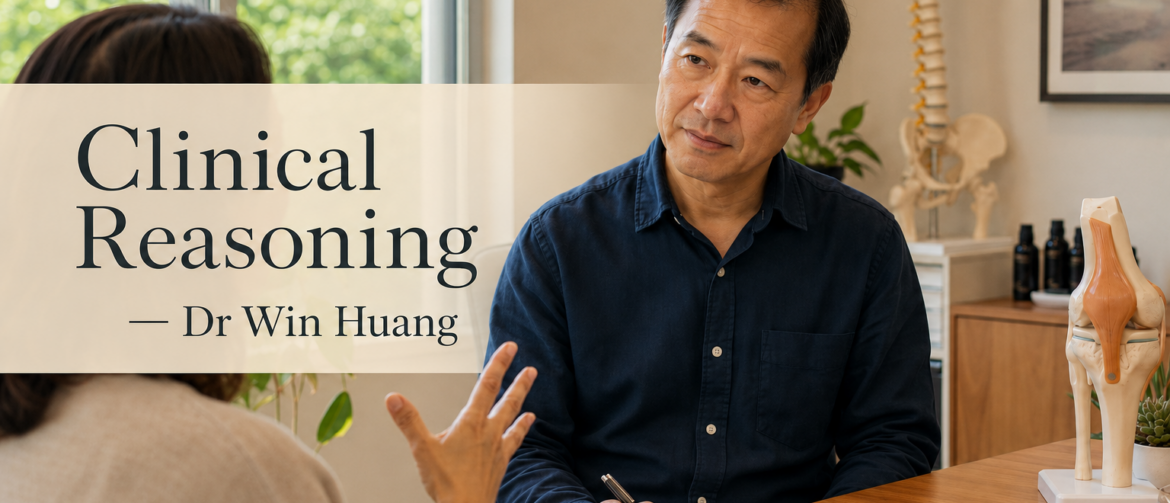
Patients bring symptoms, not diagnoses. Good clinical reasoning means turning those symptoms into clues, forming hypotheses, testing them through history and examination, ruling out alternatives and continually reassessing the evidence.
> View article
A diagnosis is rarely found by chance. Experienced clinicians follow clues, develop diagnostic hypotheses, test them through history taking and examination, and gradually narrow down the possibilities. Dr Huang shares the clinical thinking developed over more than forty years in practice.
> View article


 中文微信:nzacupunctureclinic