
近期治疗一例腰椎间盘突出而致坐骨神经痛患者,椎间盘突出严重,并且下肢疼痛,脚背麻木,专科建议他手术,患者坚持保守治疗,患病十年,保持良好状态。
患者是新西兰奥克兰BLUE橄榄球队的助理教练。

Al Rogers, assistant coach, Blues 2016 Super Rugby staff headshots, Blues headquarters, Auckland. 27 January 2016
患者,40岁,欧裔,患腰椎间盘突出十多年,经常的腰痛,腿痛。但患者不愿手术,大都做一些理疗,慢慢好转。这次发作8个多月,腰痛腿痛,伴小腿外侧及脚背麻木,做理疗后少好转,又赶上休赛期,故来做针灸。
患者几年前,曾因颈部疼痛和腰腿疼在我们诊所做过针灸治疗

针灸治疗效果明显,四次后腿麻和脚麻消失,腿痛消失,只有轻微腰痛。患者8个月来年从未做过下蹲,现在可以了,以前做提腿动作,腹股沟区疼痛难忍,现在轻松可做,以前系鞋带都是坐下系,现在可以弯腰做。总之,患者针灸治疗后,腿部麻木疼痛消失,腰腿部各种动作灵活,患者非常满意。
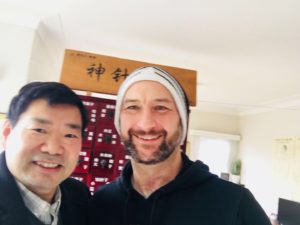
患者十多年的腰椎间盘突出,看看患者的MRI,椎间盘突出还是挺严重的。
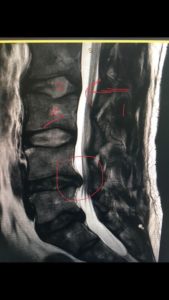
从上面患者的MRI,可以看到圆圈处腰椎四和五之间的椎间盘突出,进入椎管内;也可以看到突出的椎间盘被增生的软组织紧紧包裹。箭头指的白色的是椎管内脊髓及马尾神经,红色2是椎间盘,红色3是椎体。大家简单了解一下脊椎的结构。
Case Study | Severe Lumbar Disc Herniation — Functional Recovery with Conservative Treatment
This patient was a 40-year-old European man who worked as an assistant coach with an Auckland rugby team.
He had a history of lumbar disc herniation extending back more than ten years.
Over the years, he had experienced recurrent episodes of low back pain and leg pain. He had generally preferred conservative treatment rather than surgery, often using physiotherapy and allowing the symptoms to settle gradually.
Several years earlier, he had also attended our clinic for acupuncture for neck pain and low back and leg symptoms.
An Eight-Month Flare
This particular episode had lasted for more than eight months.
The patient had ongoing low back pain and leg pain, together with numbness along the lateral side of the lower leg and over the top of the foot.
Physiotherapy had produced only limited improvement.
Because it was the rugby off-season, he decided to return for acupuncture treatment.
His MRI showed significant lumbar disc herniation, particularly at the L4–L5 level, with the disc extending into the spinal canal.
Surgery had previously been discussed, but the patient wished to continue with conservative treatment.
Functional Limitations Before Treatment
The problem was affecting more than pain alone.
For approximately eight months, the patient had avoided squatting because of the symptoms.
Lifting the leg produced significant pain around the groin region.
Even something as simple as tying his shoelaces had become difficult. He normally needed to sit down because bending forward was uncomfortable.
These functional restrictions were important because they showed how much the problem was affecting everyday movement.
Response to Treatment
After four acupuncture treatments, the patient reported a clear change.
The numbness in the leg and foot had resolved.
The leg pain had also disappeared.
Only mild low back discomfort remained.
His movement improved at the same time.
He was once again able to squat.
The leg-lifting movement that had previously caused severe groin pain could now be performed much more easily.
He could also bend forward to tie his shoelaces rather than needing to sit down.
Overall, his leg pain and numbness had resolved and his lower-back and lower-limb movement had become much freer.
The patient was very pleased with the improvement.
MRI Severity and Clinical Function Are Not Always the Same
One of the important lessons from this case is that the appearance of a lumbar disc herniation on MRI does not always match the patient’s current level of pain or disability.
Imaging is important, especially when neurological symptoms are present.
But treatment decisions should also consider:
- pain severity;
- numbness and weakness;
- neurological findings;
- walking and movement;
- ability to work and exercise;
- and whether symptoms are improving or worsening.
A patient can have a significant disc herniation on MRI and still regain good function with conservative care.
Improvement also does not require the disc to “go back into place.”
The practical goal is to reduce pain and nerve irritation, restore movement and improve function.
When Is Surgery Considered?
Lumbar disc herniation does not automatically mean surgery is required.
Many patients can initially be managed conservatively, provided there is no serious or progressive neurological deficit.
However, surgery may need to be considered when there is progressive weakness, severe persistent neurological impairment, cauda equina symptoms, or disabling pain that does not improve with appropriate conservative treatment.
This patient had lived with lumbar disc herniation for many years and had remained physically active.
During this flare, conservative treatment again helped him regain function without surgery.
The key point is simple:
We should treat the patient’s current clinical condition, not the MRI image alone.
Published on: Sep 13, 2018 at 14:08
Revised for Website 2.0: 14 November 2026
Disclaimer:
This case study reflects one individual patient’s history, imaging findings and response to treatment. Lumbar disc herniation can cause back pain, leg pain, numbness or weakness. Progressive muscle weakness, saddle numbness, bowel or bladder dysfunction, or other serious neurological symptoms require urgent medical assessment.
Book an Appointment
If lumbar disc herniation is causing persistent back pain, leg pain, numbness or restricted movement, a detailed clinical assessment can help determine whether conservative treatment may be appropriate.
Book online:
https://booking.mananotes.co.nz/PHD-WIN/v2



 中文微信:nzacupunctureclinic


Leave a reply